March 17, 2015


Our February 9th meeting was postponed until March 16 due 
to weather.

Like all meetings, you must pass by the hospitality table manned by Carolyn and Jim Quinn.  If you can!


Historical Society of Amherst president David Clark addresses the gathering and brings members up to date with regard to finances, future plans and information regarding the societies two Museums.


Past president Janice McDermott, who chairs the ANTIQUES ON THE GREEN event spoke with the assembly. Although we still have three feet of snow out there, the event will be here in no time and she's recruiting help. This is the societies biggest fund raiser, a lot of fun and attracts large crowds of citizens and those from away to the common. If you can lend a hand contact Janice.

Neil Benner & Professor Douglas Wheeler.

Society Vice President and Program Chair Neil Benner introduced Douglas Wheeler, Professor of History Emeritus, UNH to a maximum capacity audience on the evening of March 16. In fact extra seating had to be obtained to satisfy the demand for the Professor's topic of, GEORGE WASHINGTON SPIED HERE. 

General George Washington who honed his skills under British General Edward Braddock during the French and Indian War. (1756 - 1763)

The Professor enlightened us to the fact that the colonies went to war against England with a decided disadvantage. Aside from the fact that only a third of the colonists supported this endeavor, the United Kingdom maintained the worlds strongest standing Army with an even more impressive Navy. Great Britain simply out manned us, out gunned us and had a treasury to back it all up. They even recruited Germans to their cause, hiring feared Hessian Soldiers who had a reputation of being seven feet tall and eating their vanquished. 

Although fighting on his own turf, General Washington needed more to successfully repel King George III and a Parliament lead by a vindictive Lord North that supported squashing the rebellious colonists.

The New York campaign and smuggling out information.

What General Washington needed, among other things, was information. Where were the British? Where were they going? What was their strength? Through a small band of patriots, probably spearheaded by Nathan Hale, Washington's spy ring developed.

The map above shows how agents secreted information past the British to Washington's Headquarters by choosing a circuitous versus a more direct route. Invisible ink, secret codes and agents in the night on horseback, in small boats and on foot expeditiously pass on valued information that would help level the field of battle. Espionage in its infancy in North America.

Our next meeting is on Monday, April 13th at 7:30 pm at the Congregational Church in Amherst Village where Steve Taylor will present; THE GREAT SHEEP BOOM AND ITS ENDURING LEGACY ON THE NEW HAMPSHIRE LANDSCAPE.

See you then!

February 9, 2015

NOTICE #2

The February 9th meeting titled ""George Washington Spied Here: Spies and Spying in the American Revolutionary War (1776-1783) " by invited speaker Douglas Wheeler has been rescheduled to Monday, March 16th at 7:30 pm.  The meeting will take place in the Vestry in the Amherst Congregational Church.  We look forward to seeing you in March!

Soldiers Monument, 1871, dedicated to the 25 Amherst Soldiers who died during the Civil War.

December 12, 2014

Dr. John Allen and the New England Ski Museum.

Monday evening, December 8th was a very cold night in town and the appropriate weather to listen to Dr. John Allen speak about the history of snow skiing, particularly in New England and New Hampshire.  Dr. Allen, a retired professor at Plymouth State College is the secretary and historian at the New England Ski Museum at Cannon Mountain at Franconia State Park. To visit their website click HERE.


Society Vice President Neil Benner introduces Dr. Allen to the members. Allen is the author of several books, many articles and has consulted on several movies and documentaries concerning skiing.


Dr. Allen, with the aid of slides, explained in detail the growth of this industry in New Hampshire and  highlighted the role played by the Dartmouth Outing Club and even the Tenth Mountain Division made famous from their role in WWII.


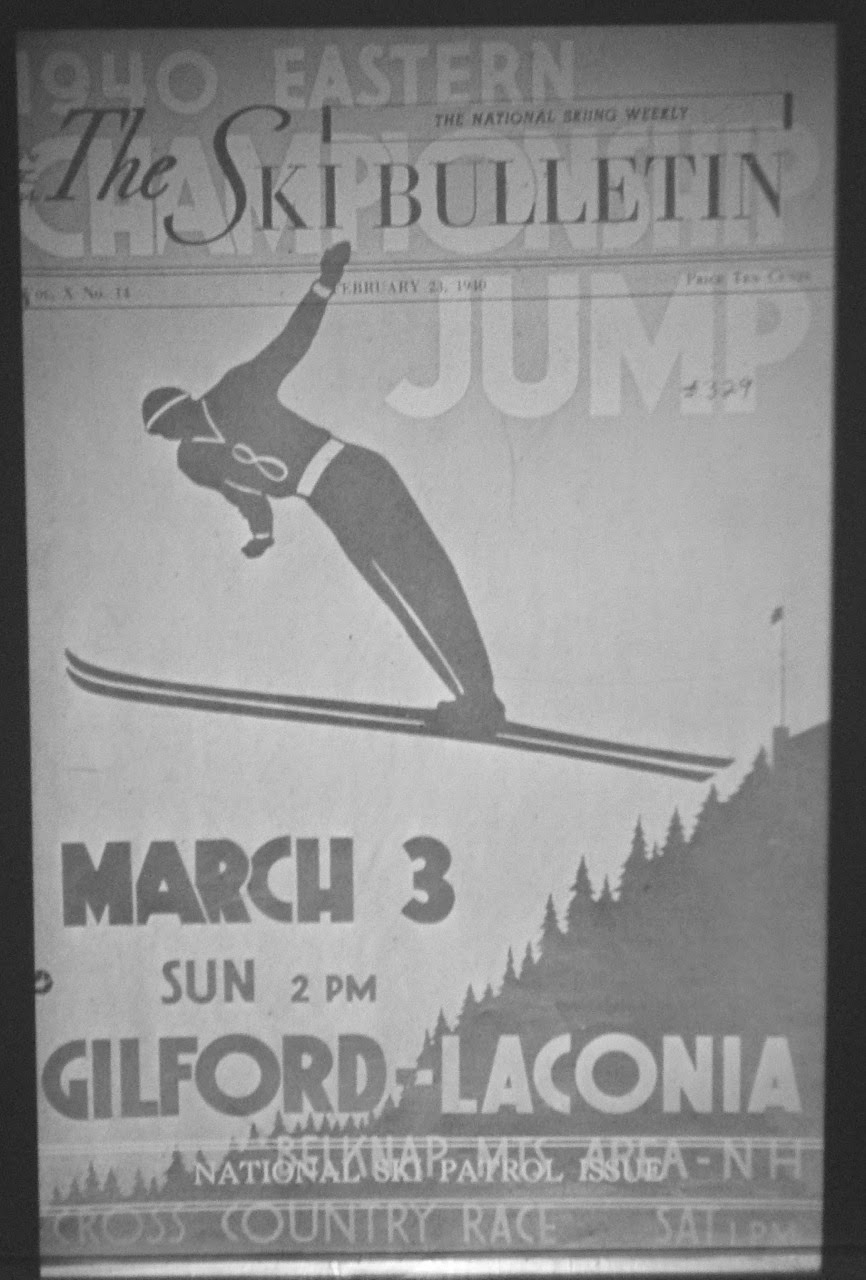
This lift may be antiquated by today's standards but was light years ahead of the "rope tows" that it replaced. This photo was taken at the Belknap Recreational Area in Gilford, NH... or what we call Gunstock today. Conceived in the 1930's and aided by FDR's Work Progress Administration it has grown today to 227 acres or 55 groomed trails with eight lifts that move more than 12,000 skiers per hour.


The Tram at Cannon Mountain.


The first "Snow Train" departed Boston's North Station on 11 January 1931 for Warner, NH. with 197 skiers. By 1932 though, the destination had changed to North Conway, NH and tens of thousands took to the trains for this day trip of skiing. By 1950, with new ski areas opening closer to Boston, Boston-Maine Railroad discontinued service to North Conway. If you ever find yourself in North Conway, a visit to the CONWAY SCENIC RAILROAD is rewarding. Their depot station is full of New England railroading memorabilia including much concerning the Snow Trains.


The Snow Train phenomenon wasn't unique to New England, they sprang up nation wide, most popularly in Colorado, Wisconsin, Idaho and Illinois. Click here to read a little history concerning these trains.


The 1874 Boston-Maine Railroad Station at North Conway, restored and reopened in 1974 as the Conway Scenic Railroad. They maintain and operate 35 miles of track with daily excursions.


You probably recognize the name Hannes Schneider who fled Nazi occupied Europe in 1939 to open his Austrian style ski school in North Conway at Mt Cranmore. He'd also played a significant role in training the Tenth Mountain Division, now based in Fort Drum, NY. Hannes died in North Conway in 1955. The "Tenth" is a light infantry unit established in 1943 and has a fascinating history. To learn a little of it, click HERE.


Slalom racing in the 1950's.


Summer ski jumping at the "Belknap Mountains Area."


A collection of New England ski area patches and buttons from the 60's and 70's. 


But these two are probably the most interesting to those of us from Amherst.


The Amherst Ski Club was created prior to 1964 and skied on Jakes Hill near Christian Hill. In 1964 though they purchased land north of town on Brook Road in Mont Vernon. The Amherst Ski Club has an interesting history. Click HERE to read and enjoy photography of this little club. If you've been around here for a while you'll recognize many names and faces on the site.


Amherst Ski Club memories with "then" 7th graders: Marie Roberge, Bev Chandley, Joan Hopkins, Peter Terkow and Duncan Carlsmith, probably 1970. From the 40's thru the 80's New Hampshire had nearly 200 "small-town," or "local" ski areas. Heres a LINK that lists all of these wonderful local areas.

Here's another site concerning Jakes Hill and the Amherst Ski Club with more detail. Click HERE.

We saw many new faces at this meeting. We invite anyone who has an interest in local history to bring a friend and join us on Monday, February 9 to enjoy a lecture concerning SPIES AND SPYING DURING THE REVOLUTIONARY WAR. 

Living in Amherst, you're surrounded by history, we urge you to join us and learn about your town.

November 30, 2014

Our Thanksgiving Storm

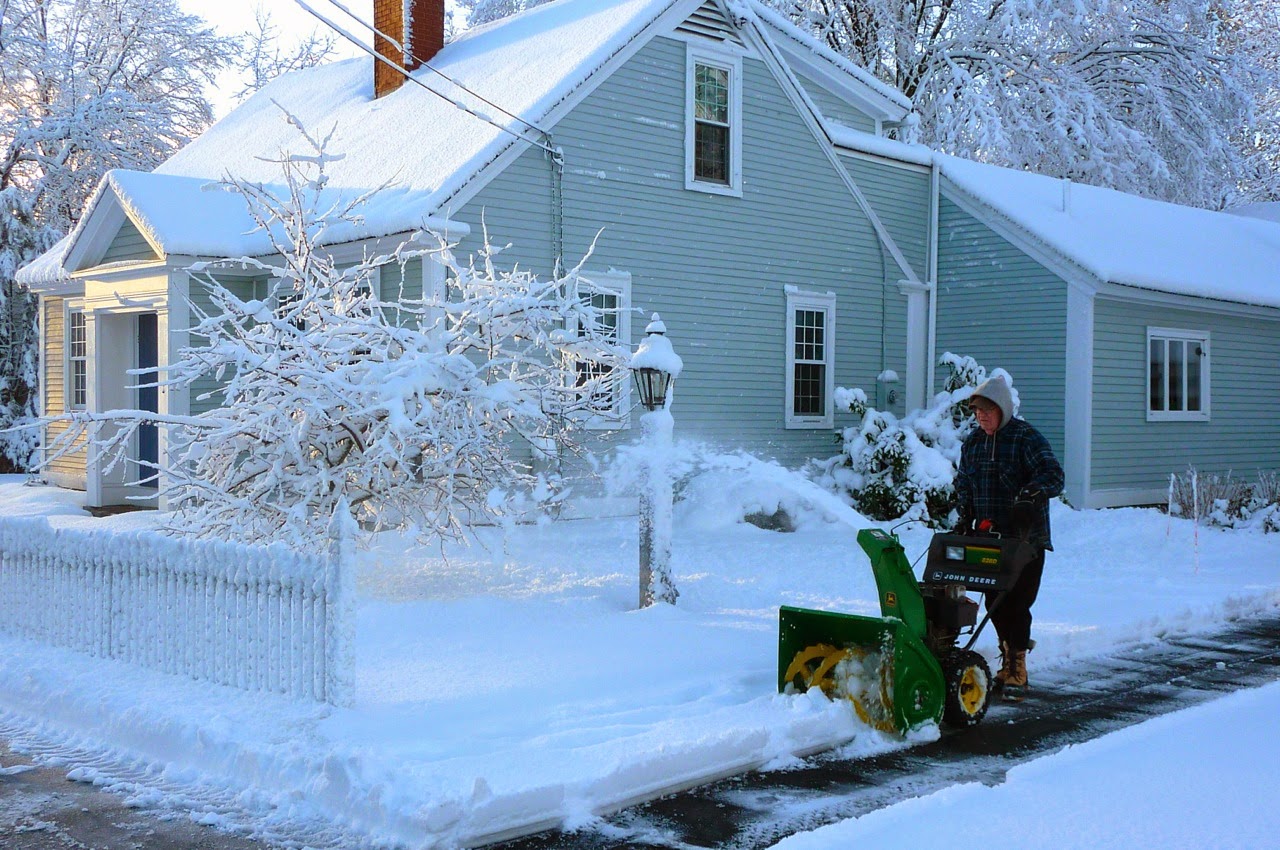
For those who may have not gotten out that day, these shots were taken on 28 November at 7:30 a.m. We only received 5" or so, but it was wet and heavy and created havoc with downed power lines, limbs and even a transformer fire in the village.


Out the door with my camera.


Looking south on Boston Post Rd at Middle Street


On BPR looking at Middle Street and the Flatiron.


Congregational Church or our Second Meetinghouse. (1774)


Third County Courthouse, now the Town Hall. (1823)


The Common. (1735)


Colonel Robert Means Mansion. (1785)


Cleaning up and plowing the Common. (1735)


On the Common


Nothing stops our DPW, even Thanksgiving Day!


Looking down School Street at the Congregational Church.


Jonathan White House. (c1818)


Congregational Church and the Common.


Soldiers Monument. (1871)


Congregational Chapel, now, one of two museums in the Village operated by the Historical Society of Amherst. Stop in for a visit sometime.(1858) 


The corner of Church and Middle Streets.


Boston Post Road, near the Flatiron.


And the end to another great Thanksgiving with my cousins, uncle, sister, nieces and nephews, family and friends.

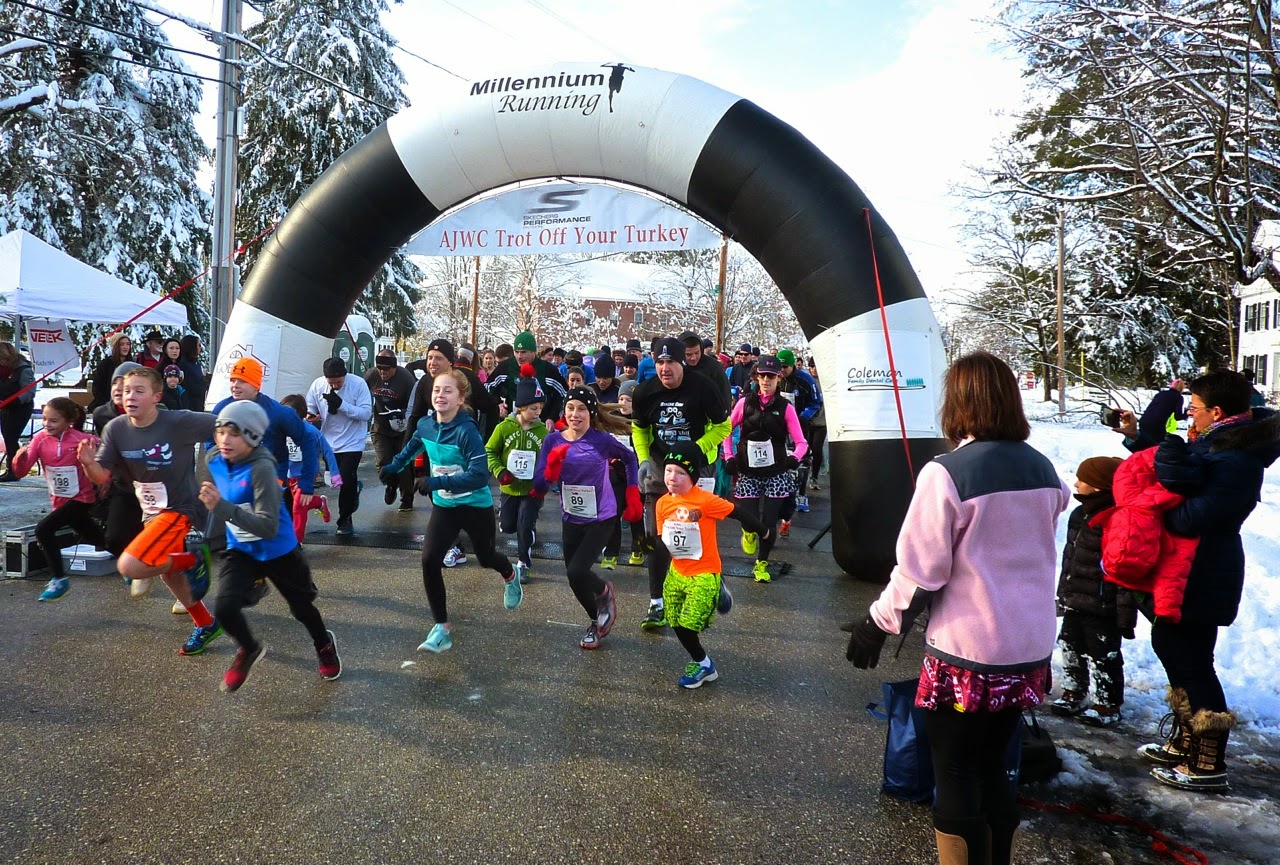
And the next day, 29 November, under bright blue skies, the Amherst "Turkey Trot"got underway.


Two races, one a 5 kilometer run/walk and a one mile "fun run" attracted nearly 130 participants as they wound there way through beautiful Amherst Village.


The flag dropped and the 5K race is off and running.


This is the 15th annual race organized by the Amherst Junior Womens Club.


Coming up Foundry Street and turning north on Boston Post Road.

November 18, 2014

Amherst Village Tomorrow


Dear fellow Amherst Historic Society  members,

Some of you may be aware that there is a study underway regarding the future of Amherst Village. This study is meant to help develop a long-term strategic plan for the Village. 
As stewards of two buildings/museums in the historic district it is important that our membership gets involved. The link below will direct you to a survey titled Amherst Village Tomorrow. By participating in this survey your input will help identify the most pressing issues facing the Village and help formulate strategies to address them.


Thank you in advance for your time and attention.
Dave Clark
President


November 2, 2014

The Historical Society of Amherst, NH... 
supports two museums, both located on Middle Street in Amherst Village.
Their hours are available on our website and are well worth the visit.


The Chapel Museum, built in 1858, is the white building to the right in this postcard.


A more recent photo of the Chapel Museum taken in 2012.


And now we have yet another reason to visit the Chapel Museum as Martha Cox, Katrina Holman and Susan Fischer prepare to re-hang the restored painting of Amherst citizen Barnabas David. If you'd like to see this portrait before its conservation click HERE, then drop down to the second row of photos and go to the far right. The difference is remarkable.

Please read Katrina Holmans story below.


Information and group photo above provided by Katrina Holman.


Information on the back of the Barnabas David portrait

Katrina Holman is an independent historical researcher and president of the Nipmugs chapter of Questers. Her historical articles appear regularly in the Amherst Citizen and the Historical Society of Amherst, NH's newsletter.


Historic Painting Returns to Amherst After Restoration
The large oil portrait of Barnabas Bradt David (1802-1883), painted in 1884 by Boston artist Thomas H. Badger (1820-1897) for Barnabas’s son James, looks fabulous after its recent professional conservation, including careful cleaning and repair. Mr. B. B. David was a partner in the whip man- ufacturing business of Melendy & David, who employed men and women in their factory in Amherst Village for four decades. Holding the painting, back again in its original frame, on the day of its return to the museum, October 21, 2014, are Martha Cox of Maine, painting conservator (on left); Katrina Holman, president of Nipmugs Questers; and Susan Fischer, curator for the Historical Society of Amherst. The conservation cost of $2,365 was funded by Nipmugs, a 24-member local chapter of The Questers, a non-profit organization headquartered in Philadelphia, thanks to a combination of a Questers preservation & restoration grant of $1,700 and proceeds from the sale of Historic Amherst suncatchers by Nipmugs. 


From the Amherst Citizen, Page 5, 10/28/14